Nourishment7 min read
Eating for your dosha: a gentle introduction
Ayurveda doesn't count calories. It asks a different question: how will this food, at this time, feel in this particular body?
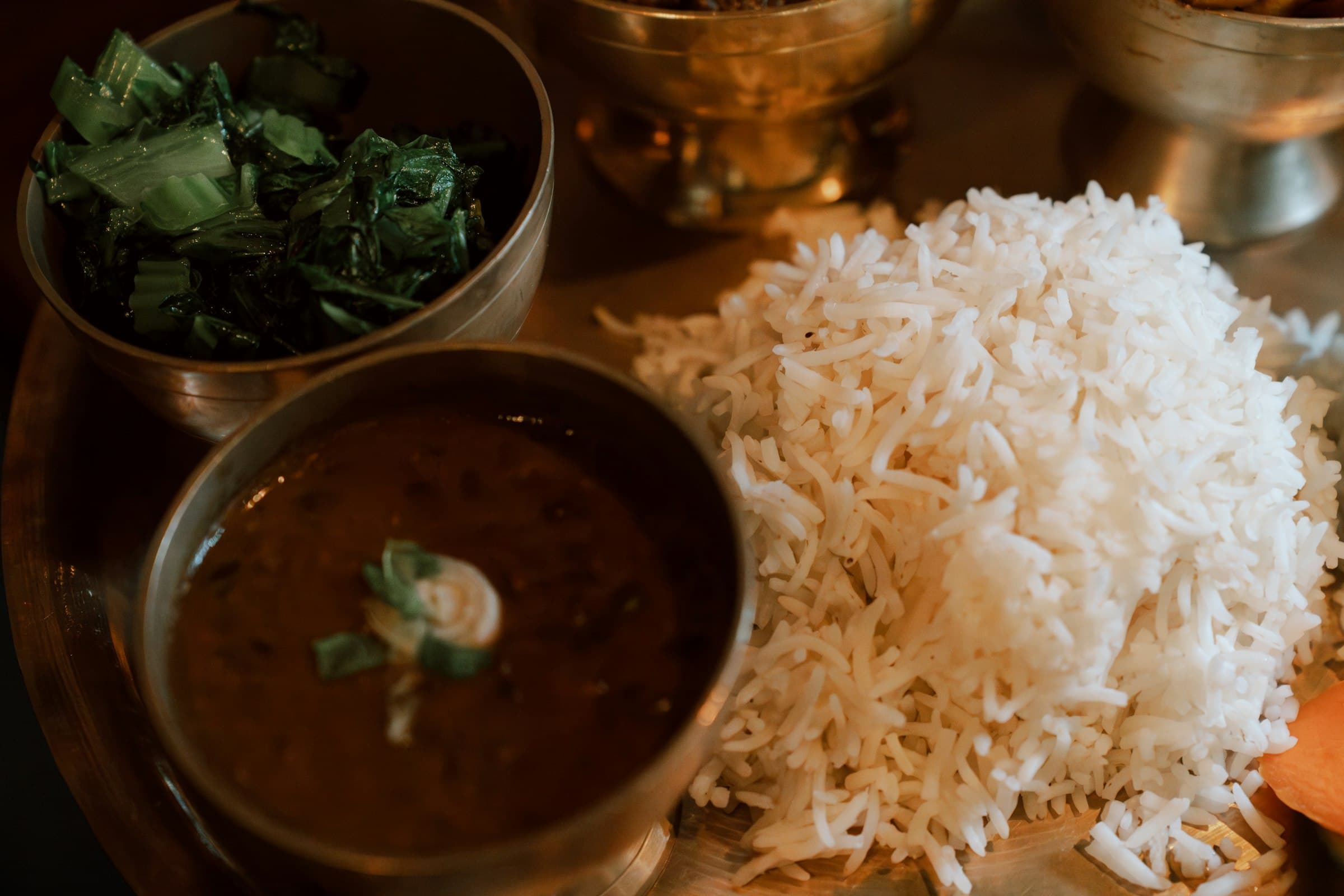
In Ayurveda, food is the first medicine. But rather than dividing foods into “good” and “bad”, it looks at their qualities — warm or cool, light or heavy, dry or moist — and at how those qualities meet your own constitution. The salad that refreshes a Pitta type on a summer's day might leave a Vata type cold and bloated in November.
Agni: the fire of digestion
At the heart of Ayurvedic nutrition is agni, the digestive fire. When agni is strong, we digest well, absorb nourishment and feel light and clear. When it is weak or erratic, even the healthiest food is poorly digested, leaving behind what Ayurveda calls āma — a heavy residue said to underlie many imbalances.
Supporting agni often matters more than any single food choice:
- Eat your main meal at midday, when digestion is strongest.
- Favour warm, freshly cooked food over cold and raw.
- Eat in a calm setting, away from screens, and stop when you are about three-quarters full.
- Leave three to four hours between meals rather than grazing.
- Sip warm water rather than iced drinks.
The six tastes
Ayurveda recognises six tastes, or rasas — sweet, sour, salty, pungent, bitter and astringent — each with its own effect on the doshas. A balanced meal includes all six, weighted towards those that suit you.
- Vata is soothed by sweet, sour and salty tastes: warm grains, root vegetables, ghee, nuts and ripe fruit.
- Pitta is cooled by sweet, bitter and astringent tastes: leafy greens, cucumber, coconut, basmati rice and sweet fruit.
- Kapha is lightened by pungent, bitter and astringent tastes: legumes, leafy greens, ginger, black pepper and lighter grains such as millet and barley.
A day of eating, simply
For a Vata type in autumn, breakfast might be warm oats with stewed apple and cinnamon; lunch a generous bowl of kitchari; dinner a nourishing vegetable soup. A Pitta type in summer might begin with cooling fruit, enjoy a substantial lunch of rice, dal and greens, and finish with a lighter dinner seasoned with coriander and fennel. A Kapha type does well with a light breakfast, a well-spiced lunch and a small, early supper.
Kitchari: the Ayurvedic comfort food
If one dish captures the spirit of Ayurvedic eating, it is kitchari. Rice and split mung beans simmer with ghee, cumin and turmeric into a soft, savoury porridge that is easy to digest and suits all three doshas. Many people eat it for a few days at the change of season to give their digestion a rest.
“When diet is wrong, medicine is of no use. When diet is correct, medicine is of no need.”
Ayurvedic nutrition is less a diet than a way of paying attention. Notice how you feel an hour after eating — light and clear, or heavy and dull? Over time, that feedback becomes your most reliable guide.
Make it personal
Every practice lands differently depending on your constitution. Discover yours in three minutes with Ojas.
Ojas offers educational wellness guidance rooted in Ayurveda. It is not a substitute for professional medical advice, diagnosis or treatment. Always consult a qualified healthcare provider about any medical condition, and before starting herbs or supplements — especially if you are pregnant, nursing or taking medication.